How Travel Insurance Protects You in an FAA Shutdown
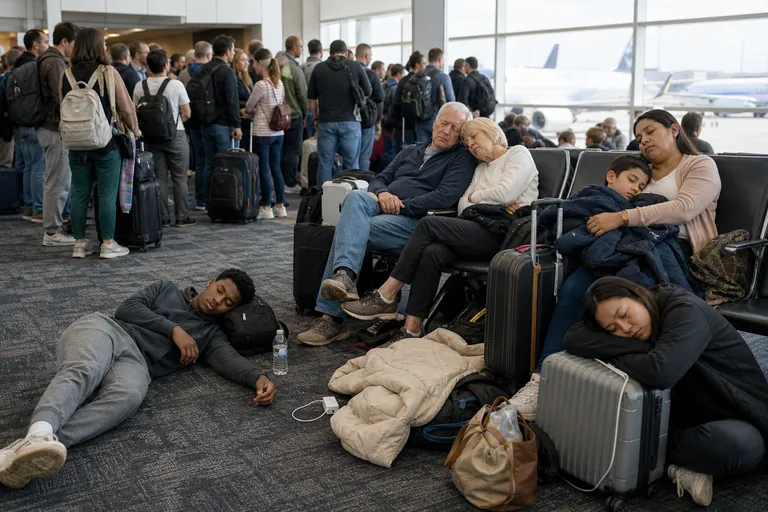
When the FAA stops or cuts flights, your airline owes you a refund for a cancelled flight you don't take. No hotel, no meals, no seat on another airline. Travel insurance pays the out-of-pocket losses left over: the hotel and meals during a long delay, and the extra cost of a new ticket on another flight that gets you to your trip.
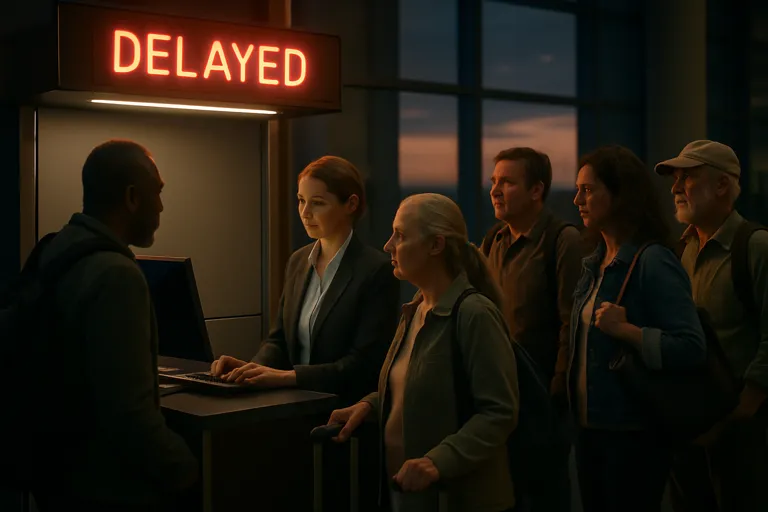
On Friday, November 13, 2026, the FAA held every departure in the country on the ground for about four and a half hours after a failure in its communications network hit air traffic control centers nationwide. Thousands of flights were cancelled over the weekend that followed. A year earlier, deep into the 43-day government shutdown, the FAA ordered airlines to cut flights at 40 of the busiest US airports because unpaid controllers were calling out. Different causes. Same airport floor.
What counts as an FAA shutdown?
Two kinds of events end up with that name, and they reach travelers in different ways.
A ground stop. The FAA halts departures, at one airport or across the country, because part of the air traffic system has failed or can't safely handle the traffic. The November 13 stop came from that communications failure. In January 2023 the system that sends safety notices to pilots went down and grounded departures nationwide one morning. Ground stops usually end within hours. The cancellations don't, because planes and crews end up in the wrong cities and it takes days to put them back.
Ordered flight cuts. In a long government shutdown, air traffic controllers keep working without pay, and staffing wears thin. In November 2025 the FAA answered that by ordering airlines to cancel a share of their flights at 40 major airports: 4% at first, rising to 6%, before it was scaled back and lifted on November 17, after the shutdown ended. Cuts like those are announced days ahead, which matters for insurance (more on that below).
Either way, the airline didn't cause it. Hold on to that. It decides almost everything the airline owes you.
What are your rights as a US air traveler?
The Department of Transportation's refund rules are your floor, and they apply no matter why the flight was cancelled:
- A cancelled flight means a refund if you choose not to travel and don't accept a credit, voucher or other offer instead. DOT's wording is "regardless of the reason," so an FAA order doesn't get the airline off the hook. Non-refundable and basic economy tickets count.
- So does a significant delay or change. For DOT that means arriving 3 or more hours late on a domestic trip (6 or more on an international one), a different departure or arrival airport, or more connections than you booked. Turn down the new schedule and you're owed your money back.
- The refund is automatic, and it's money. It goes back to the card you paid with, within 7 business days for credit card purchases, and the airline has to tell you you're entitled to it.
- You can say no to a voucher. If you'd like a credit, it has to stay good for at least five years. But nobody can make you take one.
- Booked through a travel agency or a booking site? Whoever shows up as the merchant on your card statement owes the refund.
One catch. If you fly on the rebooked flight, there's no refund, because you got the transportation you paid for. Our guide to flight cancellation and delay rights covers the everyday version of these rules.
What do airlines have to do in an FAA shutdown?
Less than most people expect. They have to keep you informed about cancellations and delays, and they have to refund you if you don't fly. Rebooking you isn't even a federal requirement, although in practice airlines offer you their own next open seat.
Anything beyond that is the airline's choice. After the November 13 ground stop the major airlines issued travel waivers that let passengers move their flights without a change fee, and during the 2025 cuts some let customers cancel for a refund even when their flight was still scheduled. Those were business decisions. The next waiver could be narrower, so read the airline's notice for the dates and airports it covers.
What aren't airlines responsible for?
This is where the arguments at the gate start.
Most big US airlines promise meals, a hotel room and a ride to the hotel when a delay or cancellation strands you, and several promise to rebook you on a partner airline. DOT lists those promises airline by airline on its cancellation and delay dashboard. Read the heading, though. They cover controllable delays, the ones the airline caused, like a maintenance problem or a missing crew. An FAA ground stop or a staffing cut isn't the airline's doing, so in an FAA shutdown the airline generally doesn't owe you:
- a hotel room, or the taxi to get there
- meal vouchers, however long you wait
- a seat on another airline
- cash for your time (none of the large airlines on DOT's dashboard promises cash compensation, even for delays they cause)
- anything for the rest of your trip: the hotel night you never used, the cruise that sailed, the tour that started without you, the concert tickets
Some airlines hand out vouchers anyway when they can. With thousands of people in line, don't count on it.
Ask the agent why your flight was cancelled. If the airline says the cause was its own (a crew or an aircraft problem), its hotel and meal promises apply. Either way, get the reason in writing or screenshot it in the app, because your insurance claim will ask for it.
How does travel insurance cover your hotel?
Through the trip delay benefit. It's the one that turns a night on the terminal carpet into a hotel room.
On the US Fire plans we offer, trip delay starts when a common carrier delay holds you up for 8 consecutive hours or more, and the airline has to document the delay. The plan then reimburses reasonable meals, lodging, taxis and local transportation that the airline (or anyone else) didn't give you free, up to a daily limit:
| US Fire plan | Trip delay (8+ hours) | Missed connection (3+ hours) |
|---|---|---|
| EZ Travel Silver | $150 a day, up to $750 | $750 |
| EZ Travel Gold | $200 a day, up to $2,000 | $1,500 |
| EZ Travel Platinum | $250 a day, up to $2,500 | $2,500 |
Limits are per person, from the current plan editions. The plan documents govern.
Two details catch people out. The plans list common carrier delay as a covered reason without asking what caused it, so a documented delay from an FAA order counts the same way a blizzard does. (It's the benefit that answers weather delays and winter storms, too.) And US Fire's delay coverage begins once you're 50 miles or more from home on the way to your trip. If the ground stop hits your home airport, the plan expects you to sleep in your own bed. Stuck at a connection in Denver, or in Lisbon on the way home? That's what the benefit is for.
Keep itemized receipts, and book a sensible airport hotel, not the suite. Our travel delay coverage guide shows how the daily and total limits play out over a delay that lasts several days.
How can missed connection and your airline refund get you a seat on another flight?
This is the part most travelers never hear about, and it's the one that saves trips.
Say your cruise sails from Miami at 4 pm Saturday. Your 7 am flight from Chicago is cancelled in an FAA ground stop, and the airline's next open seat is Sunday, a day after the ship leaves. Another airline still has a seat that lands in Miami at 1 pm. It's $640 one way, bought that morning.
Here's how the money can work:
- Turn down the rebooking and take the refund. Your flight was cancelled and you're not taking the airline's alternative, so DOT rules give you your fare back. Say $290.
- Buy the seat that gets you to the ship. $640.
- Claim the difference under missed connection. The benefit pays the "additional transportation cost": a one-way economy fare by the most direct route, minus the refund for your unused ticket. Here that's $350, inside the limits on all three plans.
You make the ship, and the refund and the claim together pay for the new ticket. You don't have to miss the sailing first. A cancellation that would have made you miss it is enough, so a seat that gets you there in time is covered just like a flight that catches up with the ship later.
And if no seat gets you there in time? The same benefit pays the fare to the ship's next port, say Key West on Monday, plus the prepaid, non-refundable part of the trip you lost (the cruise days you missed), up to the plan's limit. On Gold and Platinum it adds reasonable meals and lodging along the way.
The conditions, straight from the US Fire certificates:
- The delay or cancellation has to hold up your original flight's arrival by 3 consecutive hours or more, and the airline has to document it.
- On that original flight, you'd have missed your trip's departure: the cruise, the tour, the next part of the trip you booked separately.
- The plan pays economy (or the class you originally bought) by the most direct route. Not the first-class seat that happened to be open.
- The refund comes off whether you collect it or not. The certificate says refunds "paid or payable," so always ask for the money back rather than leaving it sitting as a credit.
- It can't be combined with trip cancellation or trip interruption for the same loss.
Keep three papers for the claim: the airline's cancellation notice, the refund confirmation and the receipt for the new ticket. Missed connection coverage has more on how the benefit works for cruises and tours.
And when the delay eats half your trip? EZ Travel Gold and Platinum treat an arrival delay that costs you 50% or more of the scheduled trip, for the same reasons missed connection covers, as a covered reason to cancel or interrupt. That moves the claim to the much larger trip cancellation and interruption limits. On a four-night long weekend, losing two days to an FAA mess is enough. (Silver doesn't include this rule.)
Can you rent a car and drive instead?
Often, yes, and it can be the smartest move in the terminal. An FAA shutdown grounds planes, not highways. If your destination is a few hours' drive away and the rental car (with gas and any one-way drop fee) costs less than the refund on your cancelled ticket, the refund pays for the drive. You get there today, and the transportation hasn't cost you anything.
The coverage for the car itself is limited, so know where the lines are:
- The plan doesn't promise to pay the rental fee. The transportation benefits are written around a common carrier (a plane, train, bus or ship), and the certificates' definition leaves out rented cars. That's why the drive works best when your refund covers it. If the rental would cost more than the refund, call the claims administrator before you rent, ask, and get any yes in writing.
- Damage to the car can be covered. EZ Travel Platinum includes $40,000 of rental car damage coverage that pays before your own auto insurance, for collision, theft or vandalism of a car you rent during your trip, whatever the reason you rented it. You have to be the driver named on the rental agreement, and trucks, jeep-type vehicles and RVs are excluded. Gold and Silver don't include it; IMG's Travel SE and LX do. Rental car damage coverage explains the rest.
- The delay benefits still apply. If you were stuck 8 hours or more before you set off, your hotel and meals in that stretch fall under trip delay.
What does travel insurance actually pay?
Your out-of-pocket loss. Worth saying plainly, because it shapes every claim. Travel insurance reimburses what the disruption actually cost you after everything else comes back. It isn't a bonus paid on top of the airline's refund.
So the claim starts with what you got back: the airline's refund, a hotel room the airline did provide, a meal voucher, a credit from the cruise line. The plan pays the rest, up to its limits. The certificates spell it out. Meals and lodging count only if they weren't "provided by the Common Carrier or any other party free of charge," and transportation is paid "less any refunds paid or payable." Benefits don't double up either. One hotel night gets paid once, even if trip delay and missed connection both apply.
That's why the order matters. Claim what the airline owes first. Then let the policy fill the gap.
Does it matter when you bought your policy?
A lot. Travel insurance covers events that were unforeseen when the coverage started, which the US Fire certificates define as "not known, anticipated or reasonably expected."
A sudden ground stop like November 13 is the clean case. Nobody saw it coming, so every policy in force that day responds. Government shutdown cuts are different. The FAA announced the 2025 reductions days before they began, and shutdowns arrive on a published funding deadline. A policy bought after cuts were announced, or once a shutdown was under way, can treat the losses as a known event. The fix is boring, and it works: buy when you book the trip, before any deadline is in the news. Our guide to government shutdowns and travel covers the rest of what a shutdown touches, from TSA lines to closed national parks.
What if your flight is still scheduled and you'd just rather not fly into the mess? Worry about a disruption isn't a covered reason to cancel. Cancel For Any Reason is, and it's included on EZ Travel Platinum when you buy within the time-sensitive period (21 days from your first trip payment on most state versions, so check your policy). It pays 75% of your insured, non-refundable costs if you cancel at least 48 hours before departure. If the trip is already under way and falls apart, Platinum's Interruption For Any Reason pays 75% of the unused trip and the extra cost of getting home, as long as you interrupt 48 hours or more after your scheduled departure date.
What should you do when the FAA stops flights?
- Check the app before you leave home. If the flight is already cancelled, rebook from your couch, not the terminal. Every policy bought on TripInsurance.com comes with free e-Travel Alerts, which can warn you about delays at a specific airport before you go.
- Decide quickly: rebook or refund. The next flights fill in minutes. If the airline's new flight still gets you there in time, take it. If it doesn't, check other airlines before you accept, because taking the rebooking gives up the refund.
- Get the reason in writing. An app notice or email saying the flight was cancelled or delayed, and why. Both delay benefits need the airline's documentation.
- Call the cruise line, tour operator or hotel right away. They can sometimes hold a room or tell you where to meet the trip, and insurers expect you to keep the loss down.
- Use the plan's 24-hour assistance line. It comes with the insurance (it's the insurer's line, not our office) and can help find flights, hotels and the next port.
- Keep every receipt and the refund confirmation. Your claim is the receipts minus what came back.
- File with the insurer once you're settled. Claims go to each plan's claims administrator, and our claims page lists who handles which plan.
An FAA shutdown is the one disruption where the airline can truthfully say it wasn't their fault, and that's exactly why travelers end up holding the bill. If you'd like help checking how a plan's delay and missed connection limits fit your trip, email support@tripinsurance.com or call 877-389-4446, Monday through Friday, 9 to 5 Pacific.
Frequently asked questions
Does the airline have to give me a hotel if the FAA grounds flights?
Generally no. Airlines' hotel and meal promises cover delays and cancellations the airline caused, such as maintenance or crew problems. An FAA ground stop or ordered flight cut is outside the airline's control, so those promises don't apply, though some airlines help anyway. Travel insurance's trip delay benefit pays a reasonable hotel and meals once your delay passes the plan's threshold, 8 hours on US Fire plans.
Will I get a refund if the FAA cancels my flight?
Yes, if your flight is cancelled or significantly delayed and you choose not to travel. DOT rules require a refund "regardless of the reason," non-refundable tickets included, back to your original form of payment, within 7 business days for credit card purchases. If you accept the airline's rebooking, a travel credit or other compensation instead, no refund is owed.
Does travel insurance cover an FAA ground stop?
It covers the delays a ground stop causes. Comprehensive plans list a common carrier delay or cancellation as a covered reason for trip delay and missed connection without asking why it happened, so a documented FAA-related delay counts. You'll need the airline's documentation, your receipts and a policy bought before the event. If the delay costs you half or more of your trip, EZ Travel Gold and Platinum also treat it as a reason to cancel or interrupt.
Will travel insurance pay for a ticket on another airline?
It can. If a covered delay of 3 hours or more would make you miss your trip's departure, such as a cruise sailing, missed connection pays the one-way economy fare on another flight, minus the refund for your unused ticket. That holds whether the new flight gets you there in time or catches up with the trip later. Take the airline's refund, buy the new ticket and claim the difference, up to the plan's limit ($750 to $2,500 on US Fire plans).
Does travel insurance pay for a rental car if my flight is cancelled?
Not the rental fee, as a rule. The transportation benefits are written for common carriers (planes, trains, buses and ships), and the definition leaves out rented cars. Driving still makes sense when the rental costs less than your airline refund, because the refund pays for it. EZ Travel Platinum's rental car damage coverage protects the car itself while you drive.
Can I cancel my trip because the FAA is cutting flights?
Not under standard trip cancellation if your flight is still scheduled, because worry about a disruption isn't a covered reason. If the airline does cancel your flight, you're owed a refund for it. To call off the whole trip for any reason, you need Cancel For Any Reason, included on EZ Travel Platinum when bought within the time-sensitive period. It pays 75% of insured, non-refundable costs if you cancel 48 or more hours before departure.
Is a flight cut during a government shutdown covered if I buy insurance after it starts?
Probably not. Coverage applies to events that weren't known or reasonably expected when the policy took effect. Once a shutdown is under way or the FAA has announced cuts, losses from them can be excluded as a known event. The policy still covers unrelated problems, like an illness or a storm. The safe move is buying when you book, before a funding deadline is in the news.