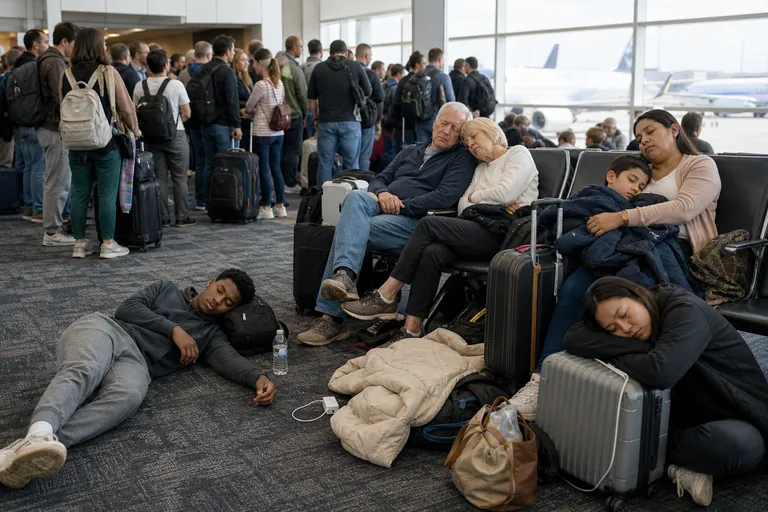
Flight Cancelled or Delayed: Your Rights + What Insurance Adds
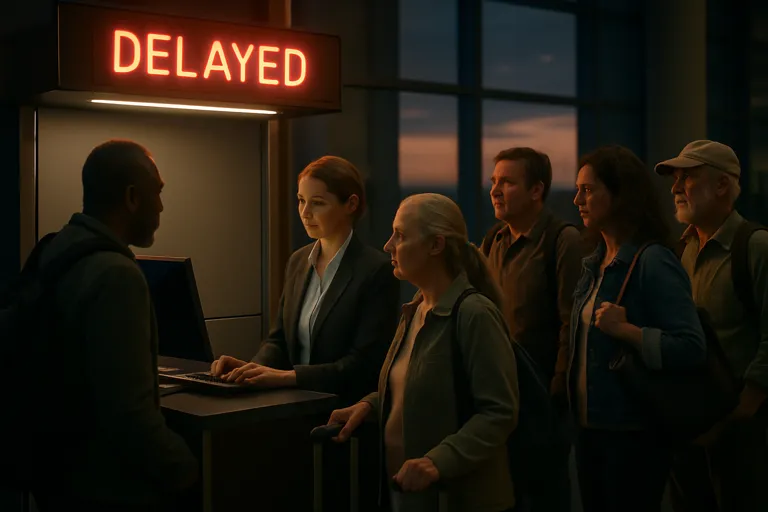
When a US airline cancels your flight and you choose not to travel, you're entitled to a full cash refund — that's a federal requirement, not a courtesy. What airlines don't owe you is everything downstream: the hotel night you lost, the cruise that sailed without you, the extra meals. That's the gap travel insurance exists to fill.
Two systems, two jobs. The airline's obligations get your ticket money back and get you rebooked. Insurance covers the consequences. Most travelers understand neither, so when a flight blows up they either demand things the airline doesn't owe or fail to claim things their policy actually pays. Let's fix both.
What do US airlines actually owe you?
Less than most people assume, but more than nothing. The rules come from the US Department of Transportation and from each airline's own customer service commitments, and both change over time, so treat this as the general shape of things and check current DOT guidance and your airline's contract of carriage for the specifics of your situation.
A refund when they cancel, if you don't travel. If the airline cancels your flight, or significantly changes it, and you decide not to take the rebooking they offer, DOT rules require a refund of the ticket price and associated fees. Real money back to your original payment form, not just a voucher — and under rules adopted in recent years, refunds for cancelled or significantly changed flights are supposed to come promptly and, in many cases, automatically when you decline alternative transportation. This applies to all flights touching the US, including basic economy fares that are otherwise non-refundable. The airline would much rather rebook you or hand you a credit. You're allowed to say no and take the cash.
Rebooking. If you do want to travel, the airline will rebook you on its own next available flight at no charge. Whether it will put you on a competitor's flight varies, some airlines have partner agreements and commit to considering it for long delays; others simply don't.
Amenities during controllable delays, varies by airline. Here's where it gets squishy. For delays and cancellations the airline itself caused (mechanical issues, crew scheduling, IT problems) most large US carriers have made written commitments: meal vouchers after a delay of a few hours, hotel and ground transportation for overnight controllable disruptions. But these are airline-by-airline commitments, not uniform law. DOT publishes a customer service dashboard showing exactly what each airline has promised. Read your airline's before you need it, because gate agents don't always volunteer what's owed.
And that's roughly it. Notice what's missing: cash compensation for your time. The EU requires airlines to pay passengers fixed compensation (several hundred euros) for significant delays and cancellations within the airline's control — the regulation known as EU261. The US has no equivalent as of this writing. Proposals surface periodically, and the rules do evolve, but today a US airline can strand you for a day caused by its own crew-scheduling mess and owe you a refund, a rebooking, maybe a sandwich and a hotel room, and nothing for the day itself.
What don't airlines owe you?
This list causes more airport arguments than any other topic in travel.
Anything during weather delays. If the disruption is weather or air traffic control, anything outside the airline's control, the amenity commitments generally don't apply. No hotel, often no meal voucher. You still get rebooked, and you still get a refund if the flight is cancelled and you choose not to travel. But an overnight weather stall is on your dime unless you have insurance.
Consequential losses. Ever. The airline's contract of carriage limits its liability to the transportation itself. The non-refundable safari lodge, the missed cruise departure, the prepaid theater tickets, the extra week of parking, the airline owes none of it, regardless of whose fault the disruption was. This surprises people every single time. The airline broke your trip; the airline only owes you the flight.
Compensation for delays where you still fly. If your flight leaves six hours late and you're on it, there's no refund — you got the transportation you bought. Some airlines hand out goodwill miles or vouchers. That's discretion, not obligation.
Where does travel insurance pick up?
Right at the line where the airline's responsibility ends. Four benefits do the work.
Travel delay. The workhorse. Once a covered delay passes your policy's threshold — commonly 6 to 12 hours, some plans as low as 3 — travel delay coverage reimburses reasonable expenses: hotel, meals, transportation, toiletries, up to a daily and overall cap. And critically, it doesn't care whose fault the delay is. Weather delay where the airline owes you nothing? Covered. Mechanical delay where the airline's hotel list is exhausted? Covered. This is the benefit that turns an airport-floor night into a hotel night.
Missed connection. If a delay makes you miss a separately booked departure, most importantly a cruise, missed connection coverage pays the cost of catching up to your trip: new flights to the next port, unused prepaid arrangements, up to the benefit limit. Cruise travelers who fly in the day of departure are the classic claimants. (Cruise travelers who fly in a day early rarely need to be.)
Trip cancellation. Standard policies list specific flight-related triggers, the common one is complete cessation of your airline's services for some consecutive period (often 12+ hours) due to weather or natural disaster. If your airline literally cannot fly and your trip becomes impossible, cancellation coverage refunds your prepaid, non-refundable trip costs, the hotel and tour money the airline was never going to give you. The details of what qualifies live in our guide to whether travel insurance covers flight cancellation.
Trip interruption. The mid-trip version. If a covered disruption cuts your trip short or forces a rearrangement, you're stranded at a connection and the only sensible option is home, trip interruption insurance covers unused prepaid arrangements and the transportation to get you back.
One thing insurance doesn't do: pay you a lump sum because flying was miserable. Like the airline, it reimburses actual, documented losses. No loss, no claim.
What should I do when my flight blows up?
The order of operations matters. Here's the decision tree.
- Get in two lines at once. Join the gate queue and simultaneously call the airline (the international desk often answers faster) and open the app. Rebooking inventory disappears in minutes during mass disruptions. Take the best confirmed seat first; optimize later.
- Ask one question: is this cancellation, or a delay? If cancelled and you no longer want to go, decline the rebooking and request a refund — remember, that's your right, and don't let anyone talk you into a voucher you don't want. If you still want to travel, take the rebooking.
- Establish the cause, in writing. Ask the agent whether the disruption is weather or airline-caused, and request it in writing or an email confirmation, airlines can provide delay-cause documentation, and your insurance claim will want it. The airline app's own notifications are evidence too. Screenshot everything.
- Claim what the airline owes before spending your own money. Controllable disruption? Ask explicitly for meal and hotel vouchers per the airline's customer service plan. Insurance is secondary to what the airline provides, and your future claim goes smoother when the airline's contribution is documented.
- Once you cross your policy's delay threshold, start spending sensibly and keep every receipt. Hotel, meals, ground transport, essentials. Reasonable is the standard — a decent airport hotel, not a suite. Itemized receipts, not credit card summaries.
- Protect the rest of the trip. Call the cruise line, hotel, or tour operator now, not tomorrow. Suppliers can often hold arrangements or rebook if warned early, which shrinks your loss, and insurers expect you to take reasonable steps to limit the damage.
- File promptly. Notify your insurer as soon as practical and submit the claim with your documentation stack: the airline's delay/cancellation confirmation with cause, receipts, proof of prepaid arrangements. Our travel delay claim walkthrough covers exactly what adjusters want to see.
Does it matter why the flight was cancelled?
For the airline's obligations, enormously. Weather and ATC problems switch off the amenity commitments; airline-caused problems switch them on. For your refund right, no: a cancelled flight you don't take gets refunded regardless of cause.
For insurance, the cause matters differently. Policies cover listed reasons: weather, natural disaster, mechanical breakdown, strikes (with conditions). Most comprehensive plans define delay triggers broadly enough, common carrier delay is often itself a covered reason, that ordinary cancellations qualify once the time threshold passes. Where it gets genuinely messy is large-scale operational collapse, which sits in an awkward spot between "airline's problem" and "covered peril." That situation is strange enough that we gave it its own article.
The practical takeaway: never assume a delay is or isn't covered based on cause alone. Check the trigger list and the threshold hours in your specific policy — then document the cause anyway, because the claim will ask.
The honest bottom line
Airlines owe you a refund or a rebooking, sometimes a meal and a bed, and nothing for the wreckage downstream. Travel insurance was built for the wreckage. Know your airline's commitments before you fly, buy a policy with a delay threshold you can live with, and when things fall apart: rebook first, document everything, spend reasonably, claim promptly.
If you want help comparing plans by their delay thresholds and per-day limits — they vary more than you'd think — email us at support@tripinsurance.com or call 877-389-4446, Monday through Friday, 9 to 5 Pacific. We'll point you at the policy language that matters.
Frequently asked questions
Am I entitled to a refund if my flight is cancelled?
Yes, if the airline cancels (or significantly changes) your flight and you choose not to travel on the rebooking offered, US DOT rules require a refund of your fare and fees to your original payment method, even on non-refundable tickets. If you accept a rebooking instead, no refund is owed. Rules evolve, so check current DOT guidance.
Do US airlines have to pay compensation like EU261?
No. The US has no equivalent of the EU's fixed cash compensation for delays and cancellations. US airlines owe refunds for cancelled flights you don't take, plus whatever amenities their own customer service plans promise for controllable disruptions. Proposals for compensation rules have been floated, and requirements can change, but today, cash-for-your-time isn't owed.
What does the airline owe me during a weather delay?
Rebooking on its next available flight, and a refund if the flight is cancelled and you elect not to travel. That's about it — hotel and meal commitments at most airlines apply only to disruptions within the airline's control, and weather isn't. Overnight weather strandings are exactly what travel delay insurance is for.
At what point does travel delay insurance start paying?
When a covered delay passes your policy's stated threshold, commonly 6 to 12 hours, with some plans as low as 3. After that, it reimburses reasonable hotel, meal, transport, and essential expenses up to daily and overall limits. Check both the threshold and the per-day cap when comparing plans; they vary widely.
Does travel insurance cover a missed cruise departure caused by a flight delay?
That's missed connection coverage's whole job. When a covered delay causes you to miss your cruise or tour departure, it pays the additional transportation to catch up (like flying to the next port) and unused prepaid trip portions, up to the benefit limit. Flying in a day early remains the cheaper insurance.
What documentation do I need for a flight delay claim?
Proof of the delay and its cause (a statement or notification from the airline), your original itinerary, receipts for every expense you're claiming, and proof of any prepaid arrangements you lost. Screenshots of app notifications help. Get the airline's delay-cause documentation at the airport if you can, it's harder to extract weeks later.
If the airline gives me a hotel voucher, can I still claim delay benefits?
You can claim what the airline didn't cover. Insurance reimburses out-of-pocket losses — so meals, transport, or a hotel you paid for yourself are claimable, but a room the airline provided free isn't a loss. Take everything the airline offers first, then let the policy fill the gaps. Adjusters expect exactly that order.