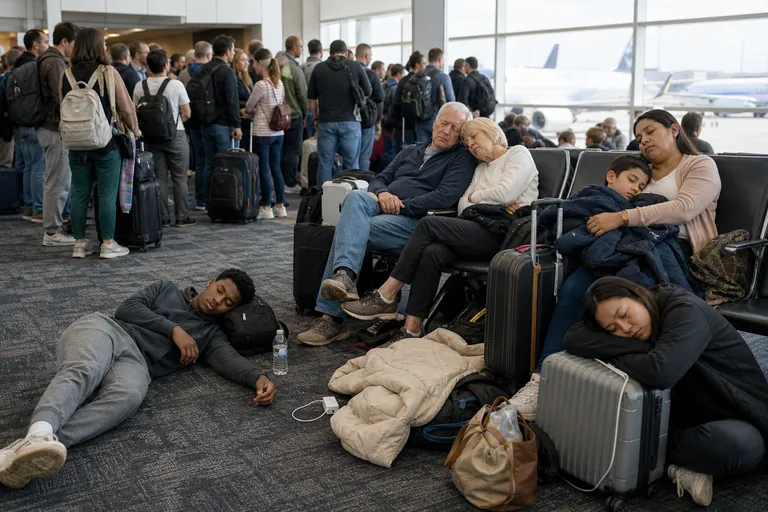
Winter Storm Travel Insurance: Coverage for Snow, Ice, and Grounded Flights

Winter storm travel insurance isn't a separate product. It's the travel delay, trip cancellation, and trip interruption benefits inside a comprehensive plan doing their job when snow and ice ground your flights. Buy before the storm is named or forecast, and a covered weather event can reimburse delay expenses, missed connections, and a canceled trip.
That's the whole idea in one paragraph. But winter weather claims get denied more than they should, almost always because of timing. So let's look at what triggers a payout, what the airline owes you separately, and the one rule that decides whether you're covered at all.
How does travel insurance cover a winter storm?
A blizzard doesn't get its own line in the policy. Instead, the storm sets off one of three standard benefits, depending on what it does to your trip.
Trip delay kicks in when the weather holds you up but you still go. Your flight sits on the tarmac for six hours, or you're stuck overnight in a connecting city. Once you cross the plan's waiting period — often 6 or 12 hours — the delay benefit reimburses reasonable extra costs. Meals. A hotel room. A rebooked leg. On our plans that runs $150 to $250 a day depending on tier, with an overall cap.
Trip cancellation applies when you can't leave at all and you cancel before departure. The most common winter trigger is written right into the policy language: inclement weather that causes a complete cessation of services for at least 12 consecutive hours of the carrier you're booked on. Twelve straight hours of your carrier not flying. Not a two-hour ground stop, not a vague "storm's coming." A documented, sustained shutdown.
Trip interruption is the same weather hitting mid-trip. You've already left, a storm strands you, and now you're eating missed hotel nights plus a pricey last-minute flight home. Interruption reimburses the unused portion of your trip and the added transportation home.
A couple of adjacent triggers are worth knowing: a government-mandated airport shutdown due to the storm, or a mandatory evacuation ordered by local authorities. Those are covered too. What's not covered is a ruined-but-completed trip with no actual financial loss — the flights eventually flew, you got home on schedule, you were just miserable. No insurance pays for a bad time. It pays for money out of pocket.
For the full mechanics of the delay benefit specifically, our travel delay coverage explainer walks through waiting periods and receipts. And if you want the broader yes-and-no on winter weather, does travel insurance cover weather delays covers the edge cases.
The rule that decides everything: buy before the storm is known
Here's the part that surprises people, and it's the same principle that governs hurricanes. You can't insure a storm that's already a known event.
The moment a winter storm is forecast and named as a specific event, or clearly bearing down on your route, it stops being an unforeseeable risk. Insurers compare your purchase date against when the event became known. Buy before the storm was on anybody's radar, and you're covered. Buy after the news is already talking about "the system moving in this weekend," and a claim tied to that storm gets denied.
This isn't the insurer being difficult, it's the whole basis of how coverage works. If people could buy a policy the night before a blizzard they knew would cancel their flight, then file the next morning, there'd be no insurable risk left. That's why the known-event exclusion exists.
So the practical advice is boring but it's the entire game: buy your plan when you book the trip, in fall or early winter, before any specific storm is a headline. Don't wait for the forecast. By the time the forecast exists, the window has usually closed. Same lesson we hammer on for hurricane travel insurance, the coverage is only as good as how early you bought it.
What does the airline actually owe you in a snowstorm?
Not much, and this catches travelers off guard every winter.
When weather cancels or delays your flight, US airlines generally owe you a rebooking on the next available flight, or a refund if you choose not to travel. That's it. Weather is considered outside the airline's control, so the compensation rules that apply to airline-caused delays don't apply. No mandatory meal vouchers. No hotel. No cash for your trouble. The US Department of Transportation lays out passenger rights and what's owed in different scenarios on its air travel consumer site, and weather sits firmly in the "you get rebooked" bucket.
So think of it as two separate systems. The airline gets you re-seated. Your travel insurance covers the money the airline won't — the extra hotel night, the meals during a long delay, the nonrefundable excursion you missed, the prepaid hotel you never reached. One handles the seat. The other handles your wallet.
Winter storms and ski trips
Ski travel is where all of this comes together, because a ski trip is basically a bet on winter weather doing exactly the wrong amount.
Too much snow at the wrong time closes the pass or grounds the flights before you arrive. Too little, and while a low-snow season is a real disappointment, plain bad conditions aren't a covered cancellation reason. A resort with thin coverage or a closed lift isn't a financial loss the policy recognizes.
If your worry is "the mountain won't be any good," the fix isn't a weather benefit, it's Cancel For Any Reason, which lets you bail for reasons the policy doesn't list and recover 75% of your nonrefundable costs. If your worry is "the storm will strand me getting there or back," the standard delay, cancellation, and interruption benefits already have you, as long as you bought early. Our ski trip insurance page gets into the on-mountain risks, gear coverage, and why the medical and evacuation limits matter more than skiers expect.
What to do when a storm is coming for your trip
If the forecast turns ugly and you're already insured, a little groundwork protects your claim.
- Document the cessation. Screenshot the airline's cancellation notice and the times. If your carrier is shut down, note when it started, the 12-consecutive-hours trigger lives or dies on timestamps.
- Keep every receipt. Meals, hotel, the rebooked segment, the taxi. Delay and interruption benefits reimburse actual spending, not estimates.
- Call the airline first for the rebooking, then handle the money side. The two systems run in parallel; don't wait on one to start the other.
- Check your waiting period and caps before assuming a short delay qualifies. A three-hour hold usually doesn't clear a 6-hour threshold.
And enroll in e-Travel Alerts, free with every policy we sell — and free to anyone since 2013. They push real-time notices about developing weather and airport disruptions that often surface before the mainstream news does, buying you time to rebook while everyone else is still asleep.
If you're not sure whether your trip and route need the higher delay caps, or you want help matching a plan to a winter itinerary, just send us an email at support@tripinsurance.com or call 877-389-4446, Monday through Friday, 9 to 5 Pacific. We'll walk through it with you.
Frequently asked questions
Does travel insurance cover flights canceled by a snowstorm?
Yes, if you bought the plan before the storm became a known event. A snowstorm that causes a complete cessation of your carrier's service for at least 12 consecutive hours is a covered cancellation reason on comprehensive plans. Buy after the storm is forecast and named, though, and a claim tied to that storm will be denied under the known-event rule.
How long does a delay have to be before winter storm insurance pays?
It depends on your plan's waiting period, commonly 6 or 12 hours. Once your delay crosses that threshold, the travel delay benefit reimburses reasonable extra costs like meals and lodging, up to a daily amount and an overall cap. A short two- or three-hour hold usually won't qualify, so check your specific policy's waiting period.
If I buy travel insurance the day before a blizzard, am I covered?
Almost certainly not for that blizzard. Once a storm is forecast and named as a specific event, it's a known risk, and insurers compare your purchase date to when the storm became known. You can still buy a policy, it just won't cover the storm already on the radar. This is why you buy when you book, not when the forecast turns.
What does the airline owe me when weather cancels my flight?
Generally a rebooking on the next available flight, or a refund if you decide not to travel. Because weather is outside the airline's control, you typically don't get meal vouchers, hotels, or cash compensation. Your travel insurance is what covers those out-of-pocket costs, the airline handles the seat, your policy handles the money.
Is a disappointing ski trip with poor snow covered?
No. Bad conditions, thin snow, or a closed lift aren't covered cancellation reasons, because there's no insurable financial loss the policy recognizes. If you want the freedom to cancel for reasons like that, Cancel For Any Reason is the tool — it pays 75% of your nonrefundable costs regardless of why you back out, as long as you meet its purchase and timing rules.
Should I get winter storm coverage for a domestic trip?
If the trip has real nonrefundable costs and winter weather could realistically disrupt your route, yes. A domestic comprehensive plan bundles the same delay, cancellation, and interruption benefits that protect you in a storm, and it's usually a small percentage of the trip cost. For a fully refundable weekend, the case is weaker, you'd be insuring money you could already recover.