Does Travel Insurance Cover Theft of Cash, Phones & Electronics?

Yes, theft of your belongings falls under the baggage and personal effects benefit, but with more limits than most travelers expect. Per-item caps, sublimits on electronics, depreciated payouts instead of replacement cost, and a near-universal exclusion for cash all shrink the check. Here's what a theft claim actually pays, and what it never will.
How does theft coverage work?
The benefit that responds to theft is baggage and personal effects coverage, and it follows you around: it applies to items stolen from checked luggage, from your hotel room, from a taxi or train, or straight off your shoulder in a crowded plaza. Pickpockets, break-ins, snatch-and-grabs — the peril itself is covered almost everywhere your trip takes you.
The catch isn't whether theft is covered. It's how much the coverage actually pays. Three separate limits stack on top of each other, and a claim has to pass through all of them.
The overall maximum. The headline number, the plan might carry $1,000 or $2,500 in total baggage coverage for the trip.
The per-item cap. Each individual item is capped, commonly somewhere between $150 and $300, though some plans go higher. Your $1,200 laptop is, to the policy, a $300 laptop. This is the number that surprises people, and it's the first thing to check in the coverage schedule.
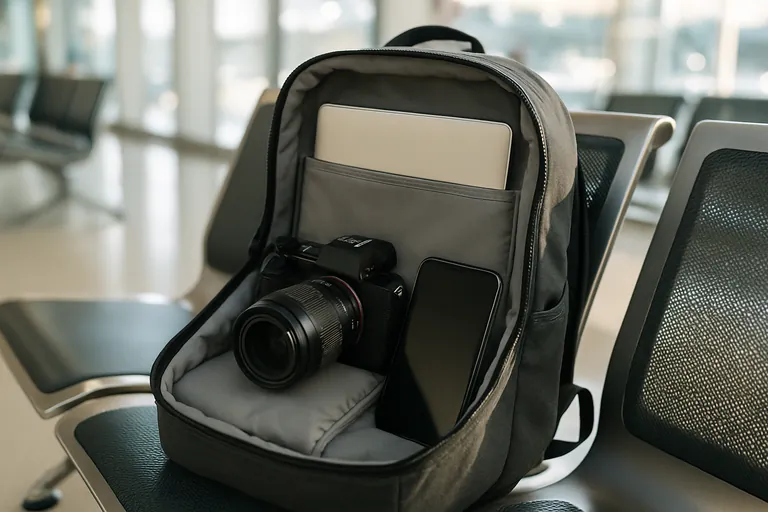
The valuables sublimit. Most plans then apply a combined cap to the whole category of tempting stuff, electronics, cameras and lenses, jewelry, watches, sports equipment. Lose a phone, a camera body, and a pair of earbuds to one hotel-room theft and they may all share a single combined limit rather than each getting its own.
And then depreciation. Policies typically pay actual cash value — what the used item was worth the day it walked off, not what a new one costs. A three-year-old phone gets a three-year-old phone's payout. Between the per-item cap and depreciation, theft coverage is designed to soften losses, not to refresh your electronics.
What about phones, specifically?
Worth its own section, because phones are the single most-stolen travel item and the coverage is genuinely inconsistent. Some plans exclude phones outright. Others cover them, but subject to the per-item cap, the electronics sublimit, and sometimes a deductible. The answer lives in the baggage section of your plan's coverage schedule, read it before you assume anything about your phone.
The money, honestly, may be the smaller problem. A stolen phone that's logged into your email and banking apps is a security breach walking around in someone else's pocket. Lock it remotely, change passwords, and note that some plans bundle identity theft assistance services that can help if it comes to that.
What's never covered
Every baggage benefit carries a list of flat exclusions, and it's remarkably consistent across the industry:
- Cash. Stolen money is essentially never reimbursed, nor are securities, money orders, stamps, or documents like deeds. A thief who takes $400 from your bag has simply taken $400.
- Unattended items. The big behavioral exclusion. Property left unattended in a public place — the bag on the beach while you swim, the phone holding your café table — is generally excluded. Same goes for valuables left in plain sight in a parked car.
- The usual list of specifics: eyeglasses and sunglasses, contact lenses, hearing aids, prosthetics and artificial teeth, musical instruments, animals, business property, fragile items. Plans vary slightly, but that cluster appears almost everywhere.
The unattended-item exclusion decides more theft claims than any other line in the policy. Adjusters distinguish between being robbed and being careless, and the policy language backs them up. Keep valuables on your body or locked up, and you stay on the right side of that line — for more on staying out of thieves' sights in the first place, see our guide to getting robbed or scammed while traveling.
One special case: if your passport went with the bag, different benefits kick in, delay coverage while you replace it, and on some plans the replacement fee. Details in does travel insurance cover a lost passport.
The police report is not optional
Theft claims require documentation that the theft happened, and the standard is a report filed with an appropriate authority, local police, or the airline, hotel, or tour operator if the theft happened in their custody. File it promptly; many policies expect a report within 24 hours or as soon as reasonably possible. No report, no claim, in most cases.
Then document value. Receipts are gold; photos of the items, credit card statements, and serial numbers all help. A smart pre-trip habit: photograph the contents of your bag and keep receipts for anything expensive you're bringing. Our claim documentation guide covers the full checklist, and the lost luggage claim process is the same machinery — theft and loss run through the same benefit.
Check your homeowners policy before you over-insure
Here's the overlap almost nobody thinks about: your homeowners or renters insurance typically covers your personal property off-premises too, including overseas, subject to your deductible and its own special limits on jewelry and electronics. For genuinely valuable items, the better move is often scheduling them on your home policy (a "personal articles floater"), which usually buys replacement-cost coverage with no deductible, worldwide.
Our honest advice runs in two directions. Don't carry what you can't afford to lose, the irreplaceable stays home. And don't expect travel insurance to be the primary insurance for what you do carry; it's a backstop with caps, sitting behind your home policy and whatever the airline owes. Travel insurance earns its premium on the medical, cancellation, and delay side. The baggage benefit is real, but it's the supporting cast.
Frequently asked questions
Does travel insurance cover stolen cash?
Almost never. Money is a standard flat exclusion in baggage and personal effects coverage, along with securities, money orders, and similar instruments. If cash is stolen with your wallet, the wallet and cards may fall under the coverage, but the bills themselves won't. Carry limited cash and lean on cards you can cancel and reissue.
Does travel insurance cover a stolen phone?
Sometimes. Some plans exclude phones entirely; those that cover them apply the per-item cap (often $150-$300), the combined electronics sublimit, depreciation, and sometimes a deductible. Check the baggage section of your plan's coverage schedule. You'll also need a prompt police or authority report to file the claim at all.
How much will I actually get for stolen electronics?
Expect the smallest of three numbers: the depreciated value of the item, the per-item cap, or what's left of the combined valuables sublimit. A $1,500 laptop under a $300 per-item cap pays $300 at most. If replacing electronics at full value matters to you, schedule them on a homeowners or renters policy instead.
Do I really need a police report?
Yes. Insurers require documentation from an appropriate authority (police for street theft, the airline or hotel if it happened in their custody) and many policies expect the report within about 24 hours. Get multiple copies. A theft claim without an official report is the single easiest denial an adjuster will ever write.
What if my bag was stolen while unattended?
Probably excluded. The unattended-property exclusion removes coverage for items left in public places, beaches, café tables, unlocked cars, visible back seats. Coverage generally holds when items were on your person, locked in your room or a safe, or in a carrier's custody. This one exclusion decides more theft claims than any other.
Is theft covered by the airline or my homeowners insurance instead?
Airlines exclude most valuables from checked-bag liability and depreciate what they do pay, so expect little there. Homeowners and renters policies usually do cover belongings worldwide, subject to your deductible and special limits — often better than travel insurance for big-ticket items, especially if you schedule them. Travel insurance baggage coverage works best as the backstop between the two.