The Free Look Period: How to Get a Refund on Your Policy
The free look period is a built-in money-back guarantee on travel insurance: a set number of days after purchase (10 to 15 days on the plans we sell, depending on the plan and your state) to read your policy and return it for a full refund. Two conditions: you haven't departed yet, and you haven't filed a claim.
That's the whole deal. No reason required, no arguing with anyone. It exists because a travel insurance certificate is a contract you can't fully read until after you've bought it, and regulators decided, sensibly, that you deserve a real chance to read the thing before you're locked in.
What is the free look period, exactly?
When you buy a policy, you get the full certificate of insurance: the actual contract between you and the underwriter, usually 20 to 30 pages of definitions, benefits, and exclusions. The free look period is your window to examine it and back out cleanly.
The length varies by plan and by state. The plans on TripInsurance.com give you 10 to 15 days, depending on the plan and your state. Across the industry you'll see about the same range, and a few states mandate longer periods for their residents. The exact number is printed in your policy documents, check yours rather than assuming.
Return the policy inside the window and you get your premium back. Some insurers keep a small administrative fee, typically five to eight dollars. Miss the window, and the policy is in force for good. More on why in a minute.
Wait — is this the same as the "lookback period"?
No, and this trips up almost everyone at some point, because the two terms sound nearly identical and both involve the insurer "looking" at something.
The free look period is about the policy. It's the 10-or-so days after purchase when you can return it for a refund. It looks forward: do I want to keep this?
The lookback period is about your health. It's the stretch of time before purchase — usually 60 to 180 days, set by the plan — that the insurer examines when deciding whether a medical claim involves a pre-existing condition. A diagnosis, treatment, or change in symptoms during the lookback can get a claim excluded unless you have the pre-existing condition waiver. It looks backward: what did the insurer know about your health?
One is a return policy. The other is a medical exclusion. You'll even see articles online that use "look back" when they mean "free look," which doesn't help. If someone tells you that you have "10 days of lookback," ask which one they actually mean before you rely on it.
How do you actually use the free look?
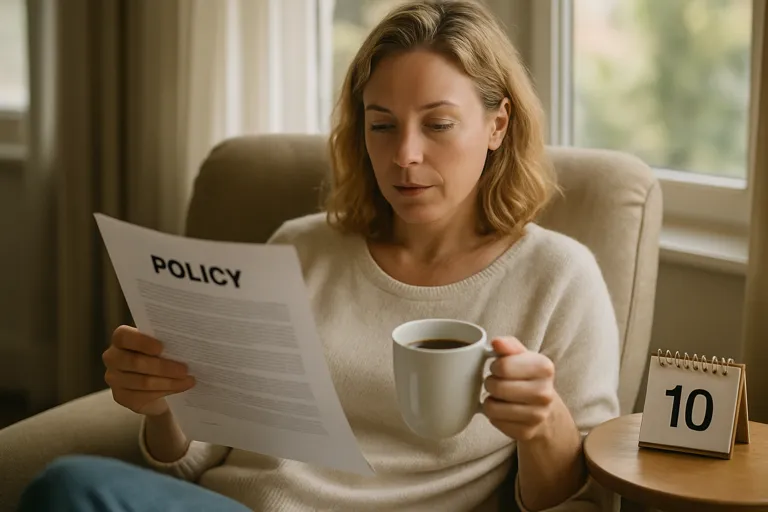
Read the certificate. Immediately. Not the brochure, not the summary page, the certificate itself, the day it lands in your inbox. Ten days evaporates fast when a trip is coming together, and the free look is worthless if the first time you open the document is at claim time.
Here's what to verify while the return window is open:
- The declarations. Travel dates, per-person trip cost, and your initial trip deposit date. A wrong deposit date can quietly wreck your eligibility for time-sensitive benefits.
- The covered cancellation reasons. Read the actual list. Does it cover the risks you're worried about, an aging parent, a job in flux, hurricane season?
- The delay coverage. How many hours of delay before benefits kick in, and is the dollar amount enough for a hotel where you're going?
- Missed connection coverage, if you're meeting a cruise or tour departure.
- The exclusions. Per-item baggage limits, adventure activities, intoxication clauses, the pre-existing condition lookback.
- The math. Deductibles and coverage limits you can live with.
If something's wrong, you don't necessarily need to return the policy — most fixes are just changes. Wrong trip cost? Adjust it. Dates moved? Update them. You can raise or lower coverage during the free look and pay (or recover) the difference. Returning the policy is the last resort, for when the plan fundamentally doesn't fit and you'd rather start over. If you do return it, replace it quickly, ideally while you're still inside the time-sensitive window so the new policy keeps the good stuff.
We wrote a full walkthrough of what to look for in how to read a travel insurance policy, it pairs with the free look like a checklist pairs with a deadline.
What are the conditions for a refund?
Simple, but absolute:
- You haven't left on the trip. Once you've departed, the policy is being used. No refund, during the free look or after.
- You haven't filed a claim. Same logic. You can't collect on a policy and then return it.
- You're inside the window. Day 11 is too late. There's no grace period and no appeal.
That's it. You don't owe anyone an explanation, and "I found a better plan" or "I decided to self-insure" are perfectly fine reasons — or no reason at all.
Why can't I cancel anytime and get my money back?
Because the insurer starts carrying your risk the moment coverage takes effect. Say you buy a policy eleven months before a big trip. For those eleven months, if anything on the covered list had forced you to cancel, the company was on the hook for your full trip cost. Asking for a refund the week before departure ("well, nothing happened") means asking them to have carried that risk for free. Nothing happened is what you paid for.
So the free look is deliberately short. Long enough to read a contract; too short to extract eleven months of free coverage.
What if your trip changes after the window closes? You're not stuck. Plans let you move your policy to new travel dates, and adjust the insured trip cost up or down with documentation, as long as you do it before your original departure date. A cancelled trip usually means a date change to the rebooked one, not a refund.
The smart workflow: buy early, verify during free look
Here's the play we recommend to everyone, because it captures both deadlines at once.
The best benefits in travel insurance (Cancel For Any Reason, the pre-existing condition waiver, financial default coverage) are only sold within 14 to 21 days of your initial trip deposit. That pushes you to buy fast. But buying fast feels risky when you haven't read the contract. The free look period resolves the tension:
- Buy within days of your first trip deposit. You lock in the time-sensitive benefits while they're still available. (See when to buy travel insurance for the full timing picture.)
- Read the certificate that week. Verify the declarations, the covered reasons, the exclusions.
- Fix, keep, or return. Adjust anything that's off. Keep it if it fits. Return it for a refund if it doesn't, and buy the right plan while your purchase window is, with luck, still open.
Buying early costs nothing extra and risks nothing, precisely because the free look exists. The traveler who waits "until the plans firm up" gives up the time-sensitive benefits for a flexibility the free look would have given them anyway.
If you're inside your free look right now and something in your certificate doesn't look right, email support@tripinsurance.com or call 877-389-4446, Monday-Friday 9-5 Pacific. We'd much rather fix a policy on day 3 than explain a gap at claim time.
Frequently asked questions
How long is the travel insurance free look period?
On the plans sold through TripInsurance.com, 10 to 15 days from purchase, depending on the plan and your state. Across the industry the range is about the same, and some states mandate longer periods. The exact number for your policy is printed in your certificate, check it the day your documents arrive.
Do I need a reason to return my policy?
No. The free look is a no-questions refund right. Whether you found a better plan, changed your trip, or just changed your mind, you get your premium back, sometimes minus a small administrative fee of $5-8, as long as you're inside the window, haven't departed, and haven't filed a claim.
What's the difference between the free look period and the lookback period?
The free look period is the 10-or-so days after purchase when you can return the policy for a refund. The lookback period is the 60-180 days before purchase that the insurer reviews for pre-existing medical conditions when handling a claim. One is a return policy; the other is a medical exclusion window. They're unrelated.
Can I get a refund if I cancel my trip months later?
Generally no. Once the free look ends, the policy is in force and the insurer has been carrying your cancellation risk — that's what the premium bought. But you can usually transfer the policy to new travel dates or adjust the trip cost instead, as long as you act before your original departure date.
Can I change my policy during the free look instead of returning it?
Yes, and it's usually the better move. You can correct trip dates, raise or lower the insured trip cost, and fix errors in the declarations. Most policies that "don't fit" just need an adjustment, not a return. Save the refund for a plan that's fundamentally wrong for your trip.
If I return my policy, can I still get CFAR on a replacement?
Only if you're still inside the time-sensitive purchase window, typically 14-21 days from your initial trip deposit, depending on plan and state. That's why we recommend reading your certificate the day it arrives: if the plan is wrong, you want enough runway left to buy the right one with the benefits intact.