Search and Rescue Coverage: When Standard Plans Fall Short
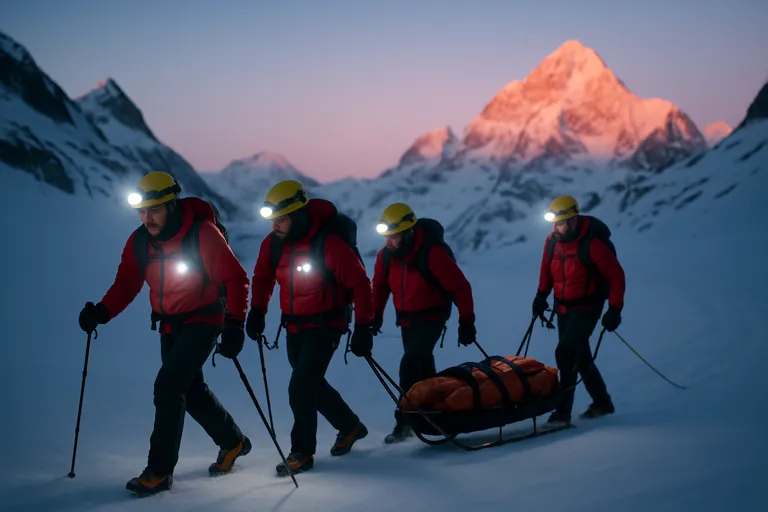
Search and rescue (SAR) coverage pays the cost of locating and extracting you when you're lost, stranded, or injured somewhere the ambulance can't reach. It's a different benefit from medical evacuation — which transports you between medical facilities — and most standard travel insurance plans exclude SAR entirely or cap it at a small sublimit. Backcountry travelers usually need a rider or a rescue membership.
If you never leave the trailhead parking lot, you can skip this page. If your trips involve wilderness, mountains, open water, or anywhere a helicopter is the plan B, this is a gap worth understanding before you're the reason the county launches one.
Search and rescue vs medical evacuation: finding you vs moving you
These two benefits get lumped together constantly, and the confusion is expensive. The clean way to hold the distinction:
Search and rescue finds you. Somebody has to locate you (off the trail, past your check-in time) and physically get you to a point of safety or first medical contact. Ground teams, dogs, helicopters flying search grids. SAR can happen even if you're not hurt at all. Lost is enough.
Medical evacuation moves you. Once you're located and in medical hands, evacuation coverage pays to transport you to a facility that can actually treat you — the air ambulance from the rural clinic to the trauma center, and eventually home if medically necessary. It's triggered by medical necessity, it's usually arranged through the plan's assistance company, and it assumes the system already knows where you are.
A serious backcountry incident often needs both, in sequence: the SAR operation gets you off the mountain; the evacuation benefit takes over from the clinic. A plan with a great evacuation limit and no SAR coverage handles the second half of that story and leaves the first half, sometimes the more expensive half, on you.
Who actually bills you for a rescue?
It depends where you are, and the range is enormous.
In much of the United States, organized SAR is run by sheriff's departments and volunteer teams, and the search itself frequently costs the rescued party nothing, a tradition maintained so people call for help early instead of gambling. But that's a norm, not a rule. Some states have laws allowing recovery of rescue costs, especially where negligence or ignored closures are involved. And the moment a rescue becomes a medical transport, the helicopter that flies you out is an air ambulance, not a search asset, and it bills.
Abroad, the picture flips. In much of Europe's mountain country, rescue is a professional or private service that bills the rescued as a matter of course; helicopter rescue in the Alps is famously efficient and famously not free. In developing regions, high-altitude helicopter rescue is a private, cash-up-front industry — Himalayan trekking operators and insurers deal with that reality daily.
The honest summary: the bill depends less on the activity than on the location and who runs rescue there, and unless you know that answer, assume you'd be charged.
Why standard travel insurance falls short here
Three reasons, all structural.
First, the hazardous activity problem. The travelers most likely to need SAR (climbers, backcountry skiers, off-trail hikers) are doing things standard plans exclude outright. If the activity is excluded, benefits connected to it fail together, and the SAR question never gets reached. That gap is covered in our adventure sports coverage guide.
Second, the definition problem. The evacuation benefit in a standard plan is written around medical transport: from a medical facility, ordered by a physician, arranged by the assistance company. A three-day search for an overdue hiker fits none of that language. No doctor has ordered anything, nobody's found the patient yet.
Third, the sublimit problem. Plans that do address search and rescue often cap it at a modest sublimit that covers a fraction of an extended search. A $10,000 SAR sublimit inside a $500,000 evacuation benefit tells you exactly how the insurer sees the risk.
How to actually cover it: riders vs memberships
Two routes, genuinely different in kind.
Insurance riders and adventure plans. Some adventure-focused travel plans include or offer non-medical evacuation and SAR benefits with real limits. It's reimbursement-style coverage: the operation happens, bills exist, the policy pays per its terms and caps. The strength is integration — one plan, one claims process, sitting alongside your travel medical and evacuation benefits. Just confirm the activity is covered, the region included, and the sublimit adequate.
Rescue memberships. A different animal: membership organizations that field or coordinate rescue operations for their members, some global services with their own operational teams, some regional programs like alpine club memberships or state rescue cards that fund local SAR. The best of them don't reimburse the rescue; they conduct or arrange it, which removes the ugly moment where someone asks who's paying before the helicopter lifts. The trade-offs: membership terms cap what's included, medical treatment afterward usually isn't their department, and quality varies, read what's operationally promised, not the brochure adjectives.
For a committed backcountry traveler, the two stack sensibly: a comprehensive plan with an adventure rider for medical and evacuation, plus a rescue membership appropriate to the region. For everyone else it's simpler: check what your plan says, and know which side of the find-you/move-you line it covers.
Who actually needs SAR coverage?
Be honest about your trips, not your self-image:
- Backcountry skiers and snowboarders — the out-of-bounds rescue is the canonical case. (Resort-trip risks are different; see ski trip insurance.)
- Climbers and mountaineers, where rescue is technical, aerial, and expensive by default.
- High-altitude trekkers in regions where helicopter rescue is private and prepayment is the norm.
- Off-trail hikers, hunters, and canyon travelers in big, empty country.
- Blue-water sailors and sea kayakers beyond routine coast guard range.
If that's not you — cruises, cities, resorts, day hikes on marked trails — a standard comprehensive plan's evacuation benefit covers the realistic version of your bad day, and SAR coverage is money better spent elsewhere.
One habit beats every coverage decision on this page: tell someone your route and check-in time, and carry communication that works where you're going, knowing what to do in an emergency matters as much as the paperwork. If you're weighing plans for a trip that's genuinely off the beaten path, email support@tripinsurance.com or call 877-389-4446 (Monday-Friday, 9-5 Pacific) and we'll help you sort out what's covered and what isn't.
Frequently asked questions
What's the difference between search and rescue coverage and medical evacuation?
Search and rescue pays to locate and extract you (from the wilderness, the mountain, the water) and get you to safety or first medical care. Medical evacuation pays to transport you between medical facilities once you're found and a physician deems it necessary. A serious remote incident often requires both, one after the other.
Does standard travel insurance cover search and rescue?
Usually not, or only barely. Standard evacuation benefits are written around physician-ordered medical transport, not searches, and many plans exclude the backcountry activities that lead to rescues in the first place. Plans that do include SAR often cap it at a modest sublimit. Read the benefit schedule rather than assuming.
Will I be billed for a rescue in the United States?
Often not for the search itself, most US SAR is run by sheriff's departments and volunteers that traditionally don't charge, so people call for help early. But some states can bill, particularly for negligence, and any medical helicopter transport out is an air ambulance bill regardless.
Are rescue memberships better than insurance riders?
They solve different problems. Memberships arrange or conduct the rescue, removing the who-pays question at the worst moment; riders reimburse costs within policy limits alongside your medical and evacuation coverage. Serious backcountry travelers often carry both. For everyone else, a good comprehensive plan is usually the right foundation.
Do I need search and rescue coverage for a cruise or resort trip?
No. If your trip stays within reach of normal emergency services (resorts, cities, marked trails, cruise ports) the realistic risk is medical, and a comprehensive plan's medical and evacuation benefits address it. SAR coverage earns its cost only when your itinerary takes you where someone would have to come find you.